Systems and automation
Reduce Admin With Business Automation
Remove repetitive work, missed handovers and avoidable chasing without turning the business into a black box.
Think Menai maps how the work really happens, connects the right tools and keeps human checkpoints wherever judgement or responsibility matters.
- Process first
- Human oversight
- Existing tools considered
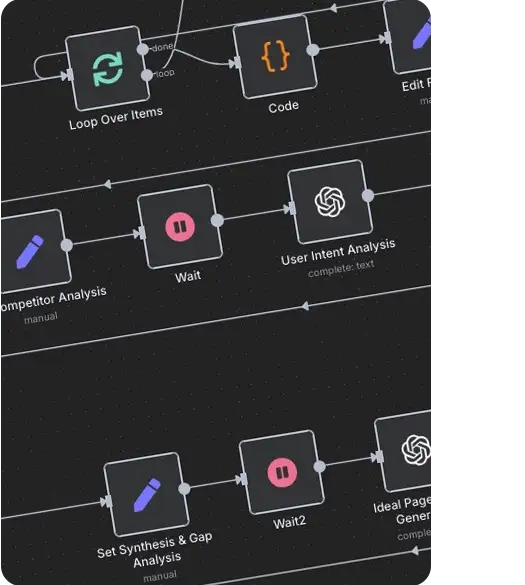
Where the time goes
The team is busy because the process keeps asking for the same work.
- 01Information is copied between systems
Forms, spreadsheets, email and software all hold different parts of the same job.
- 02People repeatedly chase routine actions
Reminders, confirmations and handovers depend on someone remembering.
- 03Reports are rebuilt by hand
The data exists, but turning it into a useful view takes time every week.
Start with recurring friction
Automate what is stable and useful
The best first projects are repetitive enough to describe, frequent enough to matter and clear enough to check. We avoid automating a broken or poorly understood process.
- 01
Enquiries and bookings
Capture details, acknowledge requests, route actions and keep follow-up visible.
- 02
Documents and routine emails
Create consistent outputs from approved information, with checks before anything important is sent.
- 03
Internal handovers
Move work between people and systems without rekeying the same information.
- 04
Reports and reminders
Prepare regular views and prompt the next action while keeping ownership clear.
How we approach it
Map, simplify, then automate
Tools come after the process is understood. This reduces risk, avoids unnecessary software and makes the result easier for the team to own.
- 01
Observe
Map the real workflow
People, systems, decisions, delays and exceptions. - 02
Improve
Remove needless steps
Fix the process before adding technology. - 03
Build
Automate the repeatable
Connect tools with monitoring and sensible controls. - 04
Operate
Test with real work
Train people, document ownership and improve safely.

Less work after the work.
The point is not automation for its own sake. It is fewer repetitive tasks, clearer handovers and more time for customers, decisions and the work only people can do.
Find the first practical winDirect answers
Automation questions
Understandable systems create confidence.
What should a small business automate first?
Start with a repetitive, rules-based process that consumes meaningful time or regularly causes missed actions. The best first project is usually narrow enough to prove value quickly.
Can automation work with our existing software?
Often, yes. We review available integrations, APIs, exports and practical workarounds before recommending a new platform.
What happens when something goes wrong?
A well-designed workflow records its actions, exposes failures and sends exceptions to a named person. Important work should never fail silently.
Where does AI fit?
AI can help with less predictable information such as documents, text and classification. It needs stronger checking and guardrails than a simple rules-based automation.
Begin with the bottleneck
Find the repetitive work that is ready to come off your team's plate.
We will review the process, the tools and the human checks needed to make the improvement safe and useful.
Plan an automation review